This is a diary of what I cook and what I eat.

Tuesday, 8 June 2010

Remember the lettuce?

Its been a couple of weeks since I last discussed the various successes and the many, many failures of my abilities in the gardening area, or in my case the yard area.  Well I am impressed, with myself that is.  I have successfully looked after a number of plants and my my, you should see my lettuce.  In fact my yard has been dubbed the 'tropical paradise of our street' by a few friends because of the shere volume of plants that are suddenly appearing.  There is now a small area in which to sit, eat and hang washing which one can barely swing a cat in.  The answer to this little dilemma is to sit and eat but forget the washing.

To many it would not be a great feat to have grown a bit of lettuce from seed, did you get that 'from seed', but to me its like an achievement that should be honoured in some way, maybe a certificate stating 'Helen, you can now grow things'.  Maybe this is a little too far but you get my drift, I'm really pleased. 

I'm going to relish every bloody mouthful of this lettuce because after weeks of talking to it and pleading with it to grow efficiently, yes I really did, I have finally grown enough to make my Mediterranean salads and to feed my very hungry African land snail; I haven't asked the snail if rocket takes its fancy but surely, everyone loves rocket. 

Two varieties were sewn including rocket and salad bowl red and green lettuce.  The rocket is lovely and peppery with a sweet edge and I was thinking some luscious pesto must be made from this and that will make for some good fun trying to balance a good recipe.

It does not end here, my growing talents have extended to tomatoes, courgettes, sweet peas and herbs.  I will point out now that I have merely planted these and not developed them from seed, that would certainly be too much this year, but I anticipate with my growing confidence I may seek to do something like that.  This is all courtesy of the godfather of growing; grandad John.  I talked about him in a previous entry and he has been a real help in getting this growing lark started.

I thought you might like to look at some pictures:
                                                                                                

Mirabelle Tomato


Courgette


Tumbling Tomato


I'm still very much a gardening virgin but I know that given time I can become the green fingered slash cookery goddess I know I want to be and I know I harp on about sustainability but its the future so embrace it. I certainly am trying to embrace it and I think the future holds some exciting things for me and my trowel.

All I'm going to say is, watch this space.

Sunday, 6 June 2010

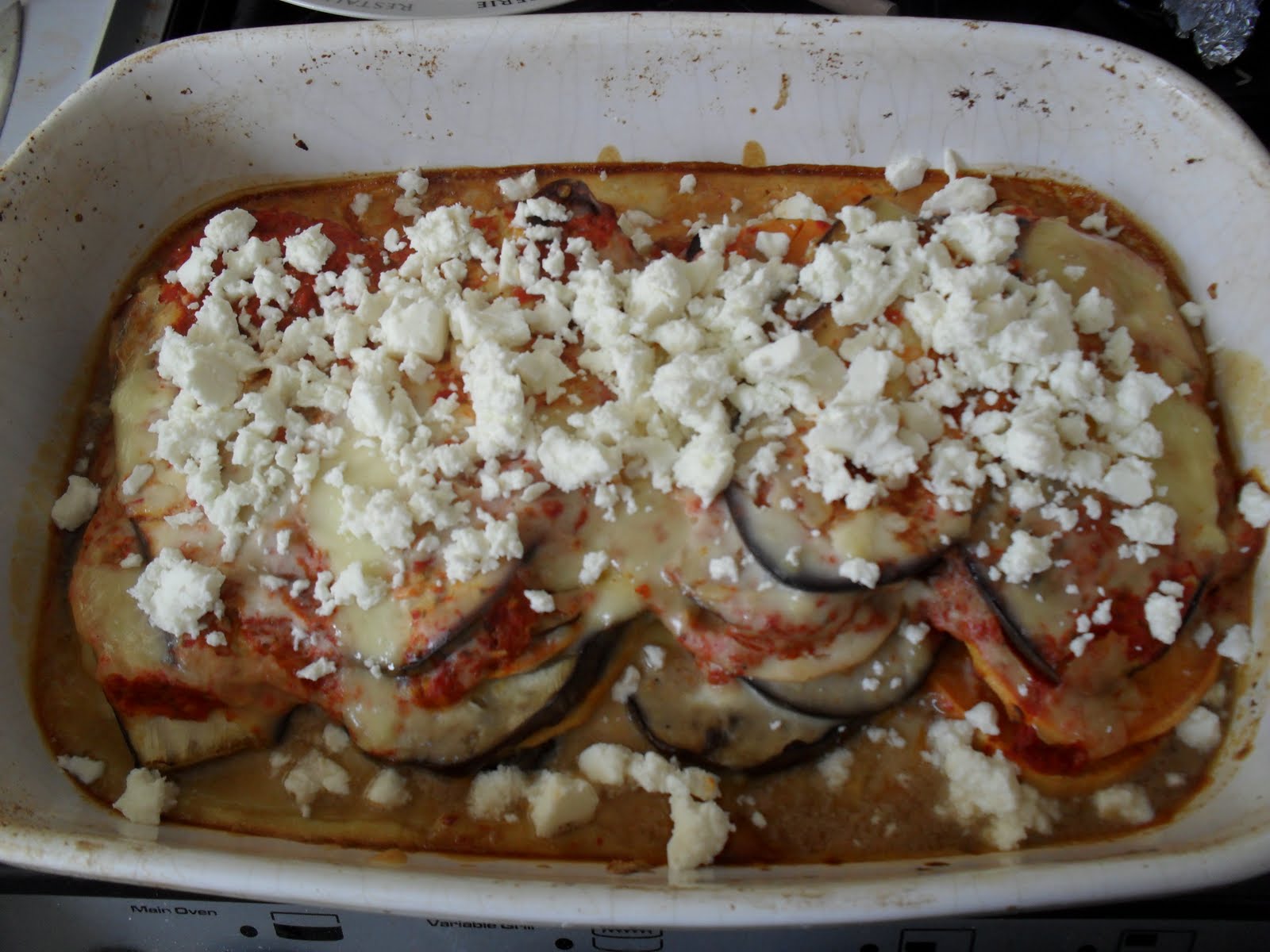
Sweet Potato and Aubergine Bake with a Feta topping


This was one of the side dishes at my dinner party and really worked with the Lamb and chicken I served.  It needs a long time in the oven because I put the potatoes in raw.  If you wanted to make it quicker you could part-boil the sweet potato before putting into the baking dish.  The only problem you could face here, might be the fact that sweet potato cooks really quickly but 5-6 minutes should be fine.

Serves 4-6 as a main/side

3 aubergines
1 large sweet potato sliced into 1/2cm slices
red pepper
1/2 red chilli
1 garlic clove
1 handful of mint
olive oil
4 medium tomatoes
1/2 red onion
1 glass of white wine

1 egg
300ml milk
1 level tbsp plain flour/oo flour
large knob of butter
pinch of nutmeg

200g Feta Cheese


1. Uses the garlic clove to line the baking dish with its flavour; rub it all around the base of the dish and then use a little olive oil to grease the dish also.

2. Slice the aubergine into 1cm slices and pan fry them on each side in a little olive oil. As they are absorbent don’t put too much olive oil in the pan because it seeps out during cooking and can cause you to have a greasy dish. Allow them to sit on some kitchen roll after this process.

3. Chop the onion and the red pepper finely and chop the tomatoes roughly. Fry them all in some olive oil in a frying pan, about a tbsp, for 5 minutes in a moderate heat. Add a glass of white wine. Allow this to reduce for a few minutes and then add the mint chopped and the chilli, also chopped. Then puree this sauce with a hand blender.

4. To assemble the bake you need to have the white sauce ready. Make a roux with the flour and butter and then gradually add the milk. Whisk all the time to create a velvety smooth sauce. Add the egg and mix in, turning the heat down to very low and finish with the pinch of nutmeg.

5. Start with a layer of potato discs and then pour a little of the red pepper sauce over. Then a layer of aubergine and another layer of potato and again, another layer of red pepper sauce. Do this until you have used up all of your layers and then pour the white sauce/egg mixture over the top. Crumble the feta over the top of the bake.

6. Cover with some foil and bake at 160/gas mark 4/5 for 45 minutes. Test with a fork and if your potatoes are soft then you can remove the foil and bake for another 10 minutes or until the top is browned.


Thursday, 3 June 2010

Mid Week Dinner Party Fun

Its been over a week since I last blogged and this is definitely because I have too much going on at work and not enough going on in the kitchen.  A lot has happened since the 19th May, the last time I blogged, including my birthday, a new knife purchase and the receipt of a second hand bread maker.  Needless to say a lot has been happening in the kitchen.  In fact to be specific a couple of flat, stodgy loaves and a lot of finely diced vegetables, I will divulge information on my lack of bread maker talent, if that is what it would be referred to, later in the week.  All I'll say is my fingers are crossed for the loaf I'm going to make this afternoon.

Being a lazy part time worker; otherwise known as a teacher, I have this week off for half term and I decided to arrange a dinner party for our teacher friends.  Trying to deliver food with a theme I had Greek in mind but in reality a lot of the things I made could have come from any Mediterranean country.

I'm going to blog about my recipes this week and just to be different I am starting with dessert.  I made a raspberry cheesecake using a recipe I have adapted from the Good Food website.  It was very tasty, even if I do say so myself, and I hope that you will enjoy it too.


Makes 10 good slices

600g cream cheese
2 eggs and 1 extra yolk
175g caster sugar
2 tbsp plain flour
142ml soured cream
300g raspberries
vanilla extract- a few drops

12 hobnobs crushed
50g melted butter

caster sugar for finish

1. melt the butter and add to the crushed hobnobs. I crushed the hobnobs in a freezer bags with a rolling pin. When it is all combined put into a 24 cm spring form tin and press down so that it is flat. Bake for 5 minutes in a moderate oven- 180/gas mark 4.


2. Beat the cream cheese, eggs and egg yolk, flour, caster sugar, soured cream and vanilla extract until light and fluffy. I did this manually with a whisk but it was a lot of work so its better to use an electric whisk. Then stir in half of the raspberries gently.


3. Pour this mixture into the tin and then bake for 45 minutes at 180/gas mark 4. The centre wobbles slightly and the outer edge looks more firm.


Before serving sprinkle with the remaining raspberries and dust with the icing sugar.


This is the cheesecake before raspberry decoration.

Wednesday, 19 May 2010

Lamb Shank


I was in the Butchers the other day and saw some lamb shanks and thought I'd get them and see what I could do with them.  Here is my really simple way of making roasted lamb shank with a red wine gravy.

serves 2

2 lamb Henrys/shanks
unsalted butter
beef stock cube dissolved in 500ml hot water
a bottle of robust red wine
sea salt
pepper
Cinnamon stick
1 tsp redcurrant jelly
olive oil
2 carrots chopped into chunks
1 onion roughly chopped

  1. Make sure the lamb shanks are dried with paper towel before you start and then season the meat. Then fry them in some olive oil so that all of the sides have browned off. Use a heavy based large pan as this will be sufficient Remove the lamb shanks from the pan and add the onion and carrot and fry gently over a low heat.  for all of the liquid to fit in.
  2. Add the bottle of red wine and then the beef stock and add the lamb shanks to the pan.  They should be half covered by the liquid.  Now here is the bit that can be altered by you.  If you want to cook it on the hob this is possible and just add the lid and turn the heat to low.  If you want to cook them in the oven then place them into a casserole dish or heatproof pan and place the lid on and cook them in a low heat.  They will take 2-3 hours depending on the size of the Henrys but essentially what you are looking for is a real softness and tenderness to the meat.  If you try to get meat off with a fork it should come away with some ease.  For the last 20 minutes of cooking, throw a cinnamon stick in.

  3. Now remove the lamb from the dish/pan and allow to rest while you drain the liquid through a sieve and then a muslin cloth to remove the impurities and the carrot mixture.

  4. Set the cooking liquor aside and place the lamb Henrys into a roasting dish.  Pour a little of the cooking liquor over them, around 2-3 ladles full, and place them into the oven in a moderate oven for roasting, around gas mark 4.

  5. Reduce your cooking liquor so that it becomes thick and glossy.  I found that it needed some extra water at the end and then I added the redcurrant jelly to give the sauce its sweetness but also because it thickens the sauce up.  Finish with a few knobs of butter for a silky sauce.

I served mine with crushed potato but mash, cous-cous or just some asparagus would be lovely; especially as its in season.

Saturday, 15 May 2010

Grow your own... lettuce?

I mentioned a few entries back, that I wanted to really concentrate on sourcing where my ingredients come from and find out a history, a story or a background on my meats.  Well I thought the answer might be for my to get a little green fingered and grow my own food.  Whilst I can't start a mini farm in my little yard I can use the space I currently have, while I wait for my allotment allocation, to grow a few veggies or something resembling an edible product. 

Obviously, I'd have to start small as up to now the only thing I've ever been known to grow is mold in my room at University.  Its a shame really because my upbringing involved being around a lot of home growing, in particular my grandad took me to his allotment where he grew raspberries, strawberries, carrots, onions, peas, broad beans, potatoes; both new and larger varieties and an array of salad ingredients and in truth this doesn't cover the other things he has grown over the years. 
Essentially, he could grow enough to provide meals, fair enough they would be minus meat, but they could provide meals from their allotment alone. 

This sustainability is an essential part of not only knowing where your food comes from, the bottom of your garden in this case, but it is vital for us to play a role in our food preparation right from seed. 

So I've started with lettuce; can grow within two weeks, is easy to plant, can be put into my yard and was the only thing I really trusted myself to grow.  Would you believe that after two weeks I could see little green shoots and I'm not sure what my neighbours thought when I was jumping around after having actually being able to grow something.  As you can see I need to leave it a bit longer before using it but its looking healthy right now.

I'm not suggesting that I'm helping sustainability just by growing my own lettuce because its really a big task and you have to be prepared to make big changes if you are to encompass what we mean by sustainability.  These changes could be sourcing British produce, growing your own food, having an allotment, not using plastic bags or purchasing food with immense amounts of packaging and that's just the start. 

So I'll let you know how I get on but hopefully this is just the start of my talents.

Wednesday, 12 May 2010

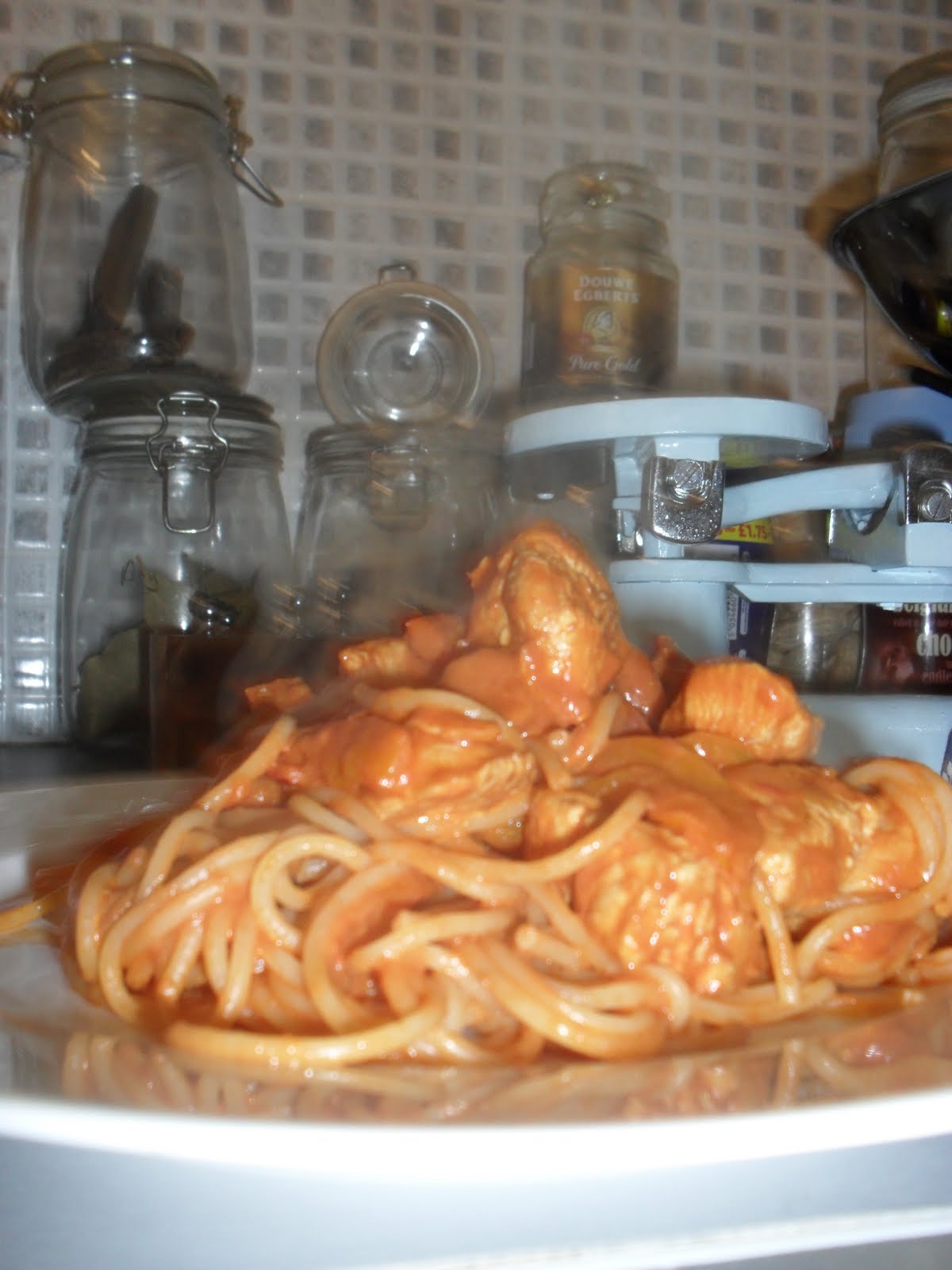
Chorizo and chicken spaghetti with a white wine and tomato sauce

I am a massive fan of chorizo both as an ingredient and eaten by itself. And wierdly enough my partner with his not to discerning taste has become so obsessed with chorizo that he actually looks miserable at the mention of me using an alternative cured meat for our fortnightly home made pizzas.


 I tend to use it in my everyday cooking as a consequence of this, which some of you may have already seen in my bolognaise recipe. I use it in soups, stews, pastas, risottos and even use it with meaty fishes such as monkfish as a stuffing or topping.


What the chorizo provides for me, I think this is probably why Mr Foodie loves it so, is a delicate spice and aroma, especially if you choose to buy the variety with the spicy paprika added. 


In this particular simple recipe for chicken and chorizo spaghetti the flavour lends itself to the absorbing quality of the chicken. The idea for me, is that the white meat of the chicken takes on the colour and taste of the chorizo so you pack in immense amounts of gutsy and tangy flavour without spending loads of time trying to get it.  You can use red wine for a richer colour and greater depth of flavour.


A perfect mid week meal


Serves 2

100g dried spaghetti
1 tbsp Olive oil
1 small red chilli, deseeded and finely chopped
1 yellow pepper, thinly sliced
250ml passata
1 glass of white wine
pinch of sugar
generous pinch of sea salt flakes
150g chorizo, diced
2 chicken breast fillets, skins off and diced
1 tbsp mascarpone cheese


1. Gently fry the peppers in the olive oil over a moderate heat for five minutes or until you can see them gently 'wilting'.


2. Add the chorizo and chilli and fry for 1 minute


3. Add the chicken chunks and stir until the chorizo oil is coating the chicken. Fry for 4 minutes.


4. Add the glass of wine and fry for 30 seconds and then add the passata and turn the heat down. Simmer this sauce for 5-10 minutes or until the chicken is cooked through. At this time you should put the spaghetti to boil with some well salted water and cook till al dente. I also check to see how acidic the sauce tastes as passata can really vary. If you feel it is too acidic then add the pinch of sugar.


5. Add your spaghetti to the sauce and stir in the sea salt to taste and add your mascarpone and then stir well.

Tuesday, 11 May 2010

Do you know where yours comes from?

I wonder if anyone else saw the brilliant 'High Street Dreams' last night on BBC one?  A fantastic display of hard work, determination and a dedication to sourcing excellent produce.  I have to admit that having the opportunity to enjoy such success would be a wonderful one for me and would certainly fulfil my foodie dreams. 

'Muddy Boots' mirrored the feelings that I constantly express at home to my partner that unless we source local produce and handle it ourselves then how do we really know where our food comes from?  This got me thinking about whether anyone really knows where all their food comes from. 
Yes, we might buy organic and we may trawl the local farmers markets finding fresh free range meat but what about the odd bagel and cream cheese you consume with your hot, steaming and expensive latte?  I know I'm guilty of forgetting the bits and pieces I wedge into my daily eats and whilst I avidly buy local and always check my labels for the Great British sign, I slip up sometimes.

So i'm launching my own campaign to attempt to know where every morsal of food comes from that goes in my mouth!
And it starts now.